Are You Sleeping Right? How the Right Mattress Determines Your Sleep Quality
TianKaylanShare
Are You Sleeping Right? How the Right Mattress Determines Your Sleep Quality
Have you ever woken up after a full 8 hours of sleep, only to feel stiff neck, aching back, and more exhausted than when you went to bed?
The problem may not be your sleep duration—it's likely the mattress you're lying on.
We spend roughly one-third of our lives in bed. Sleep is far more than just "closing your eyes and resting"—it's a critical period when your body performs cellular repair, energy storage, and hormone regulation. And all of this restorative work depends on one fundamental condition: your spine maintaining its natural curvature throughout the night.
Why Does Your Mattress Impact Your Health?
During sleep, your body is supposed to enter full recovery mode—muscles relax, spinal discs decompress, and joints get much-needed rest. But when your mattress isn't right, this "repair mode" is forcefully interrupted.
- If your mattress is too soft, your body sinks excessively, causing your spine to curve unnaturally. The surrounding muscles have to stay engaged to maintain balance, leaving you with back pain and stiffness upon waking.
- If your mattress is too firm, it creates pressure points at your shoulders and hips, restricting blood circulation. Your body will instinctively roll over multiple times during the night to relieve the discomfort—and you'll never reach the deep, restorative sleep stages your body needs.
✅ The sweet spot for most people is a medium-firm mattress—offering enough support to keep your spine aligned, with a comfortable comfort layer that conforms to your body's natural curves.
Your Sleeping Position Determines Your Ideal Mattress
Different sleep positions distribute pressure differently across your body. Here's what sleep ergonomics research recommends:
Side Sleepers
Side sleeping is the most common position. It relieves back pressure and helps open airways to reduce snoring. However, it places significant pressure on your shoulders and hips.
Ideal mattress: Medium-soft (firmness level ~6-7 out of 10). It should contour to your shoulder and hip curves, filling the gap around your waist to keep your spine in a straight line.
Pillow pairing: Use a thicker, firmer pillow to elevate your head and keep your cervical spine aligned. Place a small pillow between your knees to reduce hip joint pressure.
Back Sleepers
Back sleeping allows your spine to maintain its natural S-curve, placing minimal stress on your joints.
Ideal mattress: Medium-firm (firmness level ~7-9 out of 10). It needs to provide adequate lumbar support to prevent your lower back from arching or sinking.
Pillow pairing: Use a thinner, firmer pillow under your neck—if you can see your feet while lying flat, your pillow is too high. Place a pillow under your knees to slightly elevate your hips and relieve lower back tension.
Stomach Sleepers
This is widely considered the most stressful position for your spine—it flattens the natural curve and forces your neck into an awkward rotation.
Ideal mattress: Firmer (firmness level ~7-8 out of 10) to prevent your hips and abdomen from sinking too deeply.
Pillow pairing: Use the thinnest pillow possible—or even sleep without one—to keep your head level with your spine. If you experience lower back discomfort, place a flat pillow under your pelvic area to reduce strain.
Your Body Weight Also Matters
In addition to sleep position, body weight is a key factor in determining the ideal mattress firmness:
| Body Type | Recommended Firmness |
|---|---|
| Lighter (< 150 lbs / 68 kg) | Softer side (~4-6/10) — lighter bodies need more cushioning for adequate pressure relief |
| Average weight | Medium (~5-7/10) — balancing support and comfort |
| Heavier (> 230 lbs / 104 kg) | Firmer side (~7-9/10) — requires stronger support to prevent excessive sinkage |
How to Test If a Mattress Is Right for You
BackCare, a UK-based charity focused on spinal health, recommends a simple at-home test you can try when shopping:
- Lie flat on the mattress and try to slide your hand into the gap beneath your lower back.
- If your hand slides in easily with plenty of space → the mattress is likely too firm—your lower back isn't getting enough contouring support.
- If your hand can barely get in, feeling wedged or stuck → the mattress is likely too soft—your hips are sinking too much.
- If your hand slides in but meets slight resistance, and your hand stays in contact with your back → the firmness is just right for you.
Final Thoughts
Sleep isn't simply "lying down." It's an intimate conversation between your body and your mattress. When that conversation flows smoothly, your body can repair and rejuvenate through the night. When it's off-key, even 10 hours of sleep can feel like "wasted rest."
Choosing a mattress that fits your sleep position and body type is one of the best investments you can make for a more energized, pain-free tomorrow.
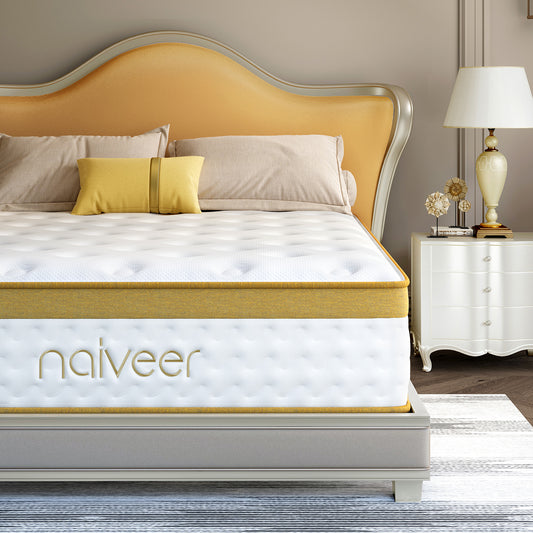
🛏️ Designed for the way you sleep — Naiveer
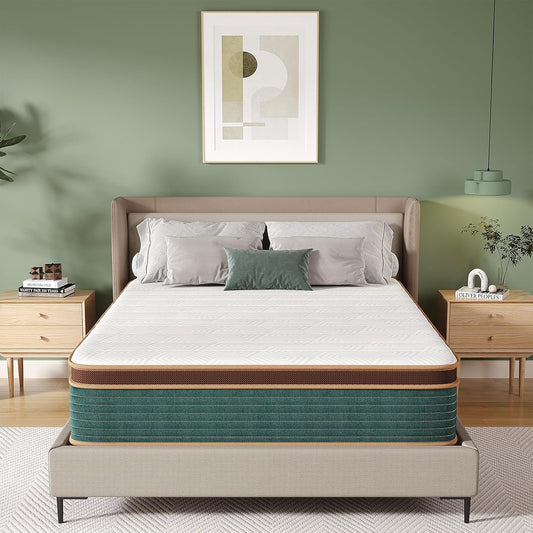
Our hybrid mattresses combine cooling gel memory foam with individually wrapped pocket springs for the medium-firm support most sleepers need. CertiPUR-US® certified foams, 100-night trial, and 10-year limited warranty — because you deserve better sleep.
Explore Naiveer Mattresses →Available in Twin, Full, Queen, and King — ships in a box to US & Canada.